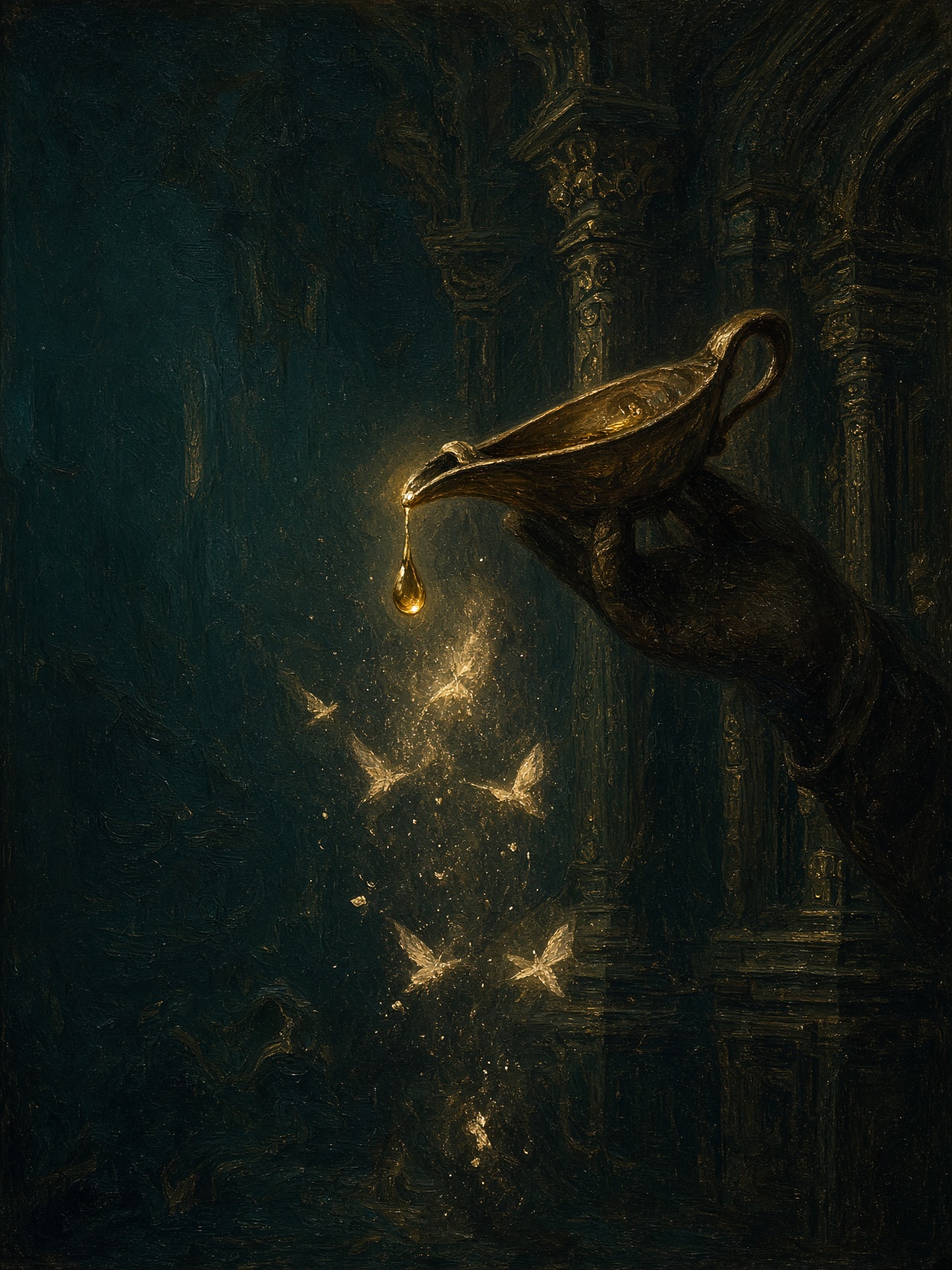
“She lifted the lamp.”
A palace, no face
Oil on the god
Tasks, help, a box
Daylight
Psyche is so beautiful that people forget Aphrodite. The goddess sends Eros to ruin her; he falls in love instead, and keeps her in a palace where she may have everything except his face. Her sisters plant suspicion. She lifts the lamp. Hot oil wakes him. He flees.
Hillman called the daimon the image that chose the life. Eros, in this tale, is that image before he is a husband. He comes only in the dark. The lamp does not invent him. It makes him visible. He is not only a bridegroom. He is the arriving that will not explain itself until it is seen.
What follows is not romance. It is a sequence of impossible tasks set by Aphrodite: sorting seeds, gathering golden wool, fetching beauty from the underworld. Psyche does not win by remaining innocent. She wins by completing the work of soul: discernment, courage, and the willingness to look.
In Apuleius she does not receive an explanation of the system first. She encounters conditions. She makes choices. She violates a prohibition. She loses something. She is given work she cannot finish alone. She gets help. She goes down. She comes back changed.
Inspect
INTERPRETATION
Psyche is the part of you that cannot stay unconscious and still call it love. Lighting the lamp is the crisis. The tasks after the lamp are the real marriage: inner, not ceremonial. Hillman would say the soul is made, not found.
The shadow
The sisters’ story, and the part that believes it. Unconscious love calling looking a crime.
Four lookings
Campbell
What lamp are you refusing to lift, and what would you owe yourself if you did?
von Franz
Which voice from the old life is still calling the dark a monster?
Hillman
Which impossible task is soul-making, not a problem to be solved?
Coelho
Can you love with the light on, and still keep the oil on the spoon?
Play the structure
A short night: lamp, loss, return. The long night: eight stations. No explanation first. Eros is not only a bridegroom. He is the daimon that arrives in the dark. A later city called that plot Neo and Trinity. He does not leave without her. She does not finish without him.