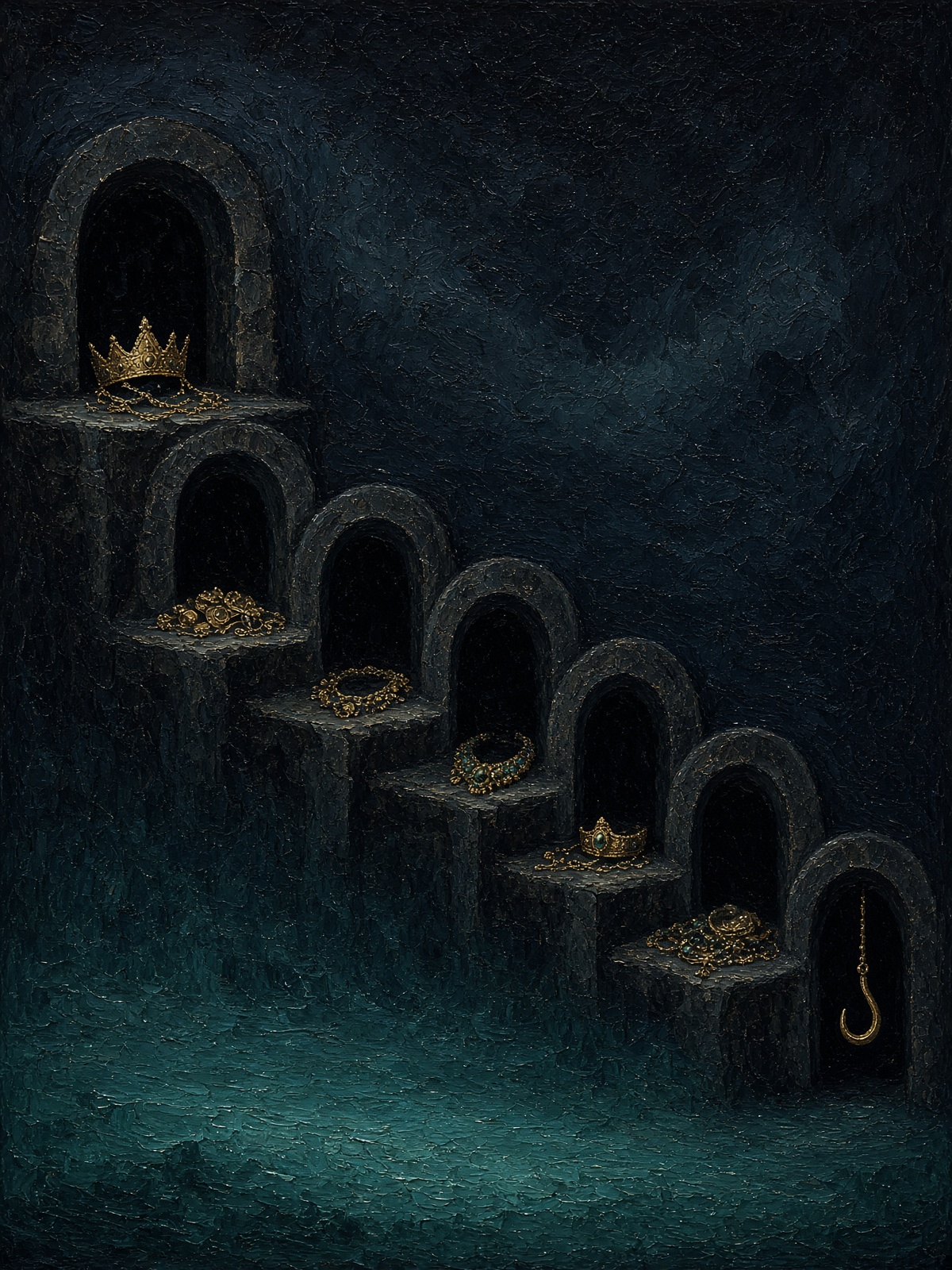
“At each gate, a garment.”
0/7
Crown. The gate does not argue.
Inanna opens her ear to the great below. At each of seven gates she is asked for a piece of her glory: crown, beads, breastplate, measuring rod: until she arrives naked. Ereshkigal kills her. She hangs. After three days, clever helpers go down with the food of life. She rises, but the underworld wants a substitute. The choice of who will take her place is part of the teaching: not everyone who failed to mourn you is innocent.
Enheduanna, the first named poet we still have, sang this goddess with a precision that still feels like reportage from the interior.
Inspect
INTERPRETATION
Inanna is initiation by subtraction. The seven gates are the identities you cannot take into the next chamber. Jung’s descent, Hillman’s underworld, von Franz’s fairy-tale stripping of the false skin: they all sit in this older pattern. Return is real, and it costs someone. Be honest about the cost.
The shadow
The glory worn through the next gate. Return that will not admit its cost.
Four lookings
Campbell
What would you have to take off to enter the next room of your life?
von Franz
Who failed to mourn you, including you, and what does that failure ask?
Hillman
If you are back from below, what new authority are you refusing to exercise?
Coelho
Which gate are you at, and what ordinary glory are you still trying to wear through it?