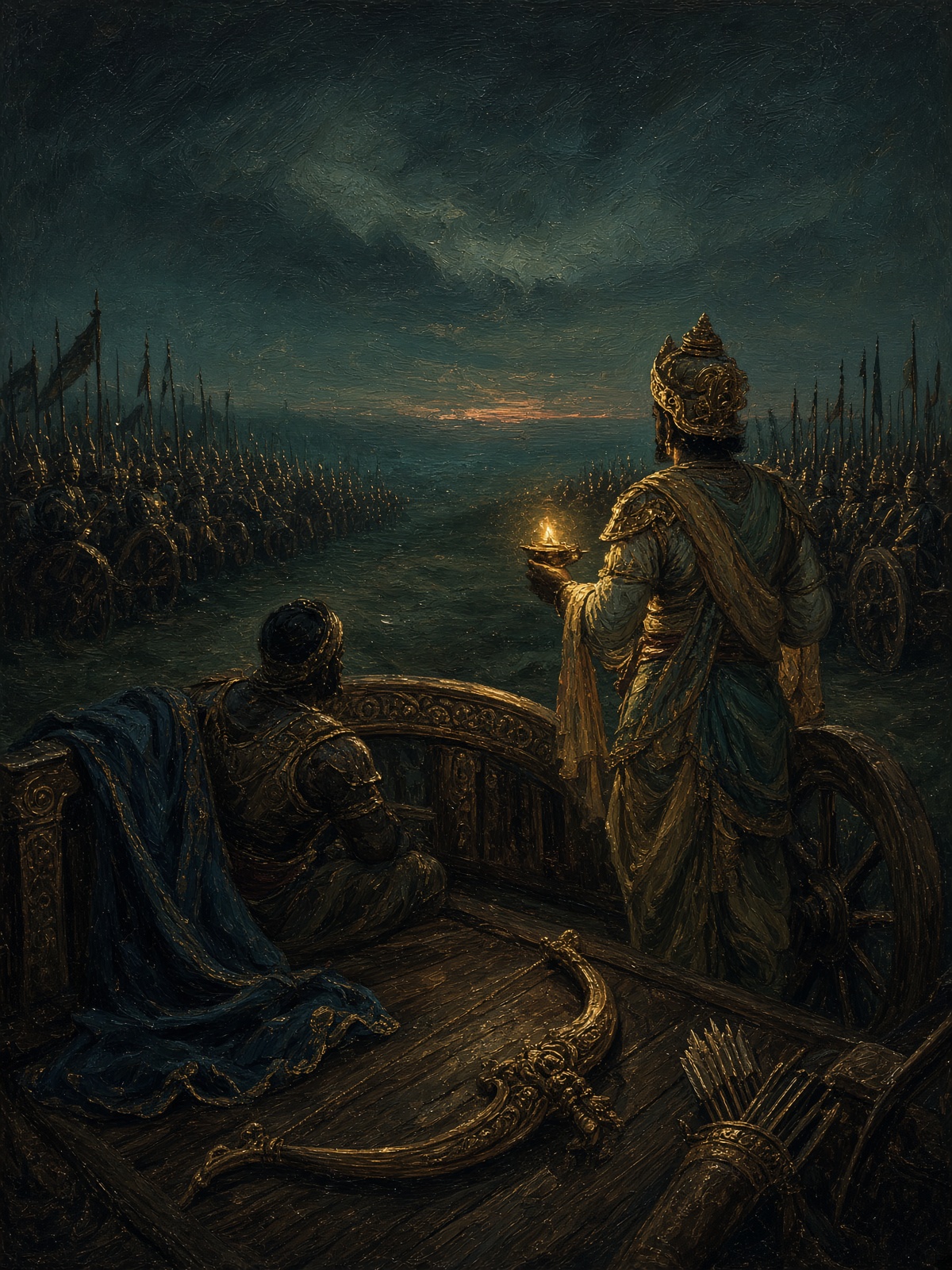
“I will not fight.”
On the field of Kurukṣetra, Arjuna sees relatives on both sides and refuses to fight. Krishna, his charioteer, does not mock the collapse. He unfolds a teaching: the nature of the self, of action, of devotion, of what can and cannot be owned. Arjuna picks the bow back up: not as the same man who dropped it.
The Gītā is a pause that became scripture. The myth is the permission to stop in the chariot and the obligation, after seeing, to move.
Inspect
INTERPRETATION
Arjuna is the ethical freeze. A calling that once felt clean now looks like harm. The medicine is not numbness and not impulsivity. It is a reorientation of who is acting. Campbell’s hero here is the one who can stay in the chariot long enough to be taught.
The shadow
Winning the old war. The bow picked up without the conversation in the chariot.
Four lookings
Campbell
Where are you frozen between two armies that both look like family?
von Franz
Who is the charioteer in you, and have you let them speak?
Hillman
What would right action be if it were not about winning the old war?
Coelho
What conversation in the chariot is the omen, before you pick the bow up?
Enter the plot
The chariot as a pause
A short night: the field, a conversation, the bow. The long night adds the conch and the question of who is acting. Not a pep talk.